 Image 1 of 1
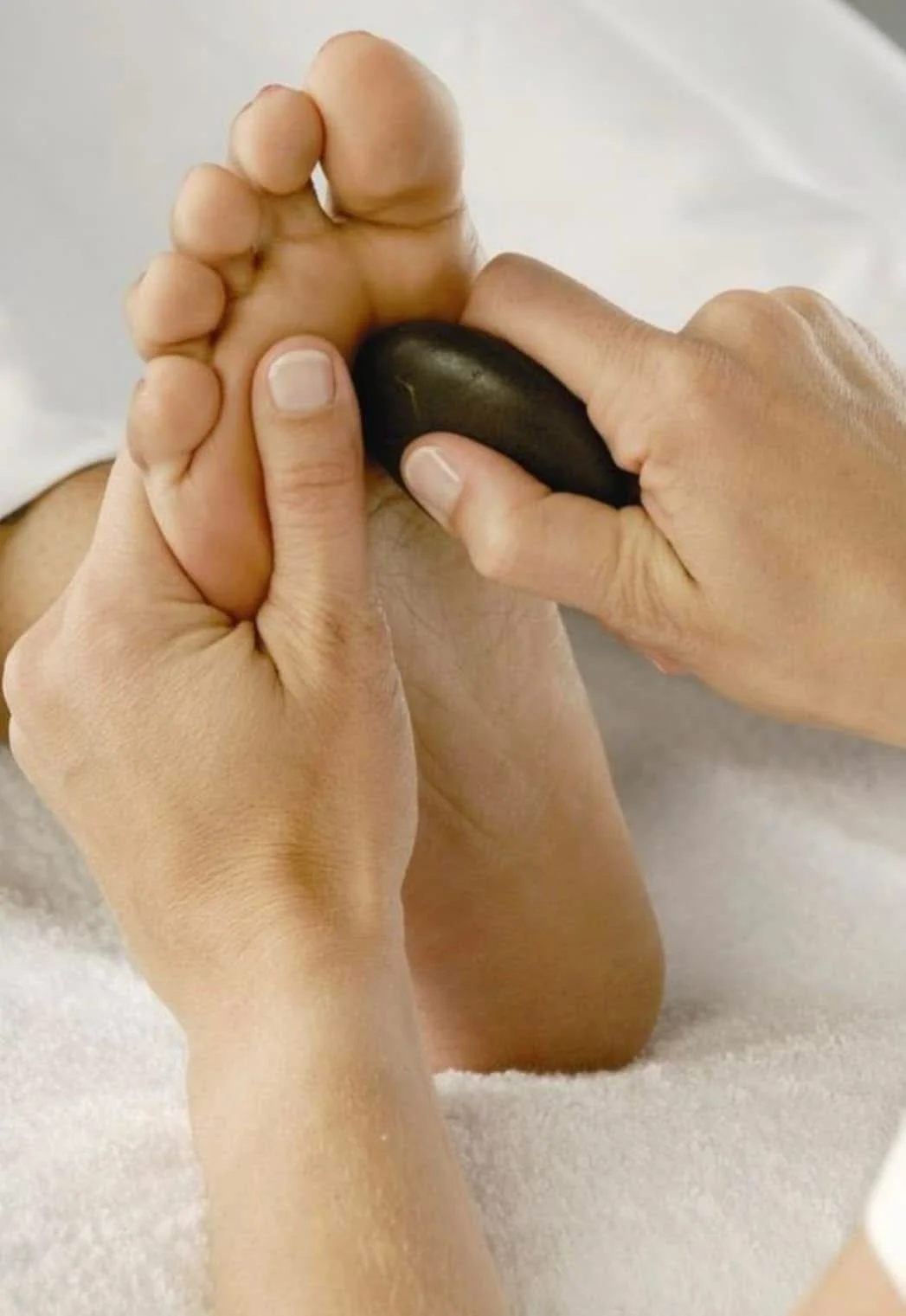
Hot Stone Reflexology is a specialized form of reflexology that incorporates the use of heated stones to enhance the therapeutic benefits. This technique combines traditional reflexology with the deep relaxation and warmth provided by the stones, which are often made of basalt, a type of volcanic rock that retains heat well.
Benefits of Hot Stone Reflexology
1. Deep Relaxation: The heat from the stones penetrates muscles, promoting relaxation and reducing tension.
2. Improved Circulation: Warmth helps dilate blood vessels, enhancing blood flow and oxygen delivery.
3. Pain Relief: Relieves soreness and stiffness in the feet, hands, and body.
4. Stress Reduction: Calms the nervous system and promotes mental clarity.
5. Enhanced Reflexology Effects: The warmth softens tissues, making reflex points more responsive to stimulation.
How Hot Stone Reflexology Works
1. Stone Placement: Heated stones are placed on key reflex points on the feet, hands, or body to target specific organs and systems.
2. Massage Techniques: Reflexologists use stones in gliding motions or hold them in their hands to apply pressure to reflex zones.
3. Combination Therapy: The warmth of the stones complements traditional reflexology techniques such as thumb-walking and circular motions.
Key Reflex Areas for Hot Stone Reflexology
• Feet: Stones are used to work on the reflex zones corresponding to major body systems.
• Hands: For those who may prefer hand reflexology, stones can stimulate reflex points related to stress, digestion, or pain.
• Back/Body: In some sessions, stones are placed along the spine or other areas for added relaxation.
Hot Stone Reflexology Process
1. Preparation:
• Stones are heated to a comfortable temperature (typically 120–130°F or 48–54°C).
• The reflexologist ensures the stones are not too hot to avoid discomfort or burns.
2. Session Techniques:
• Stones are placed between the toes, under the feet, or along reflex zones.
• Gentle pressure is applied with the stones to stimulate reflex points.
3. Cool Stones: Sometimes, cool stones are used alternately to reduce inflammation and improve circulation.
Precautions and Considerations
1. Temperature Sensitivity: Clients with conditions like diabetes or neuropathy should inform the practitioner, as they may have reduced sensitivity to heat.
2. Skin Safety: The practitioner should check the stone temperature before use to prevent burns.
3. Contraindications:
• Avoid hot stone therapy if you have open wounds, inflammation, or circulatory disorders.
• Consult a healthcare provider if pregnant or experiencing other health conditions.
Hot Stone Reflexology is ideal for those seeking a deeper sense of relaxation and therapeutic benefit. Would you like to explore more about the tools, setup, or a step-by-step guide?
Hot Stone Reflexology is a specialized form of reflexology that incorporates the use of heated stones to enhance the therapeutic benefits. This technique combines traditional reflexology with the deep relaxation and warmth provided by the stones, which are often made of basalt, a type of volcanic rock that retains heat well.
Benefits of Hot Stone Reflexology
1. Deep Relaxation: The heat from the stones penetrates muscles, promoting relaxation and reducing tension.
2. Improved Circulation: Warmth helps dilate blood vessels, enhancing blood flow and oxygen delivery.
3. Pain Relief: Relieves soreness and stiffness in the feet, hands, and body.
4. Stress Reduction: Calms the nervous system and promotes mental clarity.
5. Enhanced Reflexology Effects: The warmth softens tissues, making reflex points more responsive to stimulation.
How Hot Stone Reflexology Works
1. Stone Placement: Heated stones are placed on key reflex points on the feet, hands, or body to target specific organs and systems.
2. Massage Techniques: Reflexologists use stones in gliding motions or hold them in their hands to apply pressure to reflex zones.
3. Combination Therapy: The warmth of the stones complements traditional reflexology techniques such as thumb-walking and circular motions.
Key Reflex Areas for Hot Stone Reflexology
• Feet: Stones are used to work on the reflex zones corresponding to major body systems.
• Hands: For those who may prefer hand reflexology, stones can stimulate reflex points related to stress, digestion, or pain.
• Back/Body: In some sessions, stones are placed along the spine or other areas for added relaxation.
Hot Stone Reflexology Process
1. Preparation:
• Stones are heated to a comfortable temperature (typically 120–130°F or 48–54°C).
• The reflexologist ensures the stones are not too hot to avoid discomfort or burns.
2. Session Techniques:
• Stones are placed between the toes, under the feet, or along reflex zones.
• Gentle pressure is applied with the stones to stimulate reflex points.
3. Cool Stones: Sometimes, cool stones are used alternately to reduce inflammation and improve circulation.
Precautions and Considerations
1. Temperature Sensitivity: Clients with conditions like diabetes or neuropathy should inform the practitioner, as they may have reduced sensitivity to heat.
2. Skin Safety: The practitioner should check the stone temperature before use to prevent burns.
3. Contraindications:
• Avoid hot stone therapy if you have open wounds, inflammation, or circulatory disorders.
• Consult a healthcare provider if pregnant or experiencing other health conditions.
Hot Stone Reflexology is ideal for those seeking a deeper sense of relaxation and therapeutic benefit. Would you like to explore more about the tools, setup, or a step-by-step guide?